Reality check: defending democracy the right way
By: Shafqat Mahmood
Friday, January 08, 2010
http://thenews.jang.com.pk/daily_detail.asp?id=217425
Email: shafqatmd[at]gmail.com
Why can't we get it right? Our cricketers fight hard to get into a position to win and then squander away the advantage like errant sons running through a vast inheritance. Our politicians fight hard for democracy and then start undermining it by not caring a fig for governance, placing nieces, nephews and long-lost friends in every job imaginable, make money hand over fist, and then challenging the courts.
For cricketers the only whistleblower is the frustrated and deeply embittered public, because the doddering old man who heads the board – another case of blatant nepotism – has no clue how to run cricket. Surrounded by leeches who gather around every chairman, he is a metaphorical Nero on a grand tourism jaunt while Pakistan cricket burns.
For the politicians it is the courts that intrude into their dream world and try to hold them to account. This becomes a red rag to the raging bull of democracy because, obviously, asking any politician where he or she got his palaces and million-dollar accounts amounts to inviting dictatorship. All kinds of cards are fished out to scare the courts and the people. The best defence for loot and plunder is not laundering black money into white or claiming legitimate means of income. It is wrapping the noble flag of democracy around yourself and claim to be a symbol of the faded dreams of the poor. And there is a brazenness to this that is quite astounding. People whose only turn on in life is how much to make, and how quickly, claim to be champions of those who never had, or ever will have, anything. And this is not all. They have also now emerged as carriers of ethnic dreams. Touch them and entire ethnicities, they claim, will be up in arms.
Arrayed with them in these battle lines of morality are those whose claims are to a higher calling, who remind us all the time of our failings towards other human beings. How they square in their minds the obvious and visible manifestations of plunder and their insistence on narrow principles of legality is difficult to understand. The lesson drawn by those waiting in line for their opportunity to rob this nation is simple. Make as much money as you want but make sure that this creaky, unwieldy, corrupt and imperfect judicial system does not convict you. If you can ensure this, every lover of democracy and human rights – people who have never made a crooked penny in their life or said boo to a goose in anger – will stand and fight with you. The looters, when alone, would be beside themselves with amusement. The best minds and the most sensitive souls in the land, who cry copious tears when a stray dog is shouted at, are standing with them upholding esoteric principles of legality and democracy!
How great this democracy is.
They must be telling themselves. It not only allows the likes of us to come to the top for more opportunities of plunder, it also gathers all manner of do-gooders to defend us. Bleeding-heart liberals for whom a principle is more important than the worst crime, incorrigible leftists waiting for the red dawn, defenders of human and animal rights who travel the world saving Maoris' in New Zealand and whales in the Arctic, upright columnists and independent journalists who would rather go to the gallows than give in to a dictator -- all these great and the good help us to consume our loot and get away with plunder.
We love democracy.
While many of us are sticklers for the letter of the law, isn't it strange that we define democracy only to mean the rights of the elected? Is democracy only confined to an election, and does that give a licence to the representatives of the people to do what they like? Isn't the Supreme Court, or indeed judiciary at every level, also an essential pillar of democracy? No one would like democracy to be destabilised. The nation as a whole has fought long and hard for it. But is it only a court decision against a particular individual that undermines it? What about those who are threatening to resist the courts, or saying that they will not resign and take the whole system down if a decision comes against them? Are they also not destabilising democracy?
The wrap of prudence has to be worn by everyone. The courts have to remain within the confines of law and the Constitution. This is almost a tautology, because by definition courts are interpreters and defenders of the rule of law. They become irrelevant if this is undermined. At the same time, those anointed by the will of the people to constitute a government and hold high offices in the land also have a responsibility towards democracy. Whether a decision goes against them or in their favour, they have to accept it, abide by it and implement it. That is the only way to build democracy. Going in any other direction means destroying it. Politicising court verdicts may be clever tactics. President Zardari has done a great job turning the focus away from his alleged wrongdoings towards the survival of democracy. Some of his supporters have also raised the spectre of dangers to the federation. It is also a political masterstroke to get the provincial assemblies of three provinces to give him a vote of confidence. Nawaz Sharif has also declared his everlasting love for Mr Zardari, going so far as to say that even if his party deserts him, he will stand by him. These are astute political moves and, if there was a danger of direct military intervention, possibly, very effective too. But the situation we face today is not a looming danger of another martial law unless there is a constitutional deadlock and a complete breakdown of the democratic system of governance. If that happens then the army, whether it likes it or not, will have to intervene. All the political moves will come to naught in that case.
The real danger then is a clash of institutions and that has to be avoided at all cost. It can be done by not attacking the Supreme Court or politicising its decisions. Every issue that comes before it must be fought, but by legal arguments and within the confines of the court. That is the definition of democratic behaviour. Any other way, is a recipe for trouble. The next few months will be a challenge. For the government, for the courts, and for everyone else taking positions one way or the other. The only way forward is strict adherence to law and the Constitution.
And someone please sack this cricket board. Its failures are a pain too much.
vendredi 8 janvier 2010


Rs. 1 Billion memorial for Benazir
A memorial to Benazir
By: Zubeida Mustafa
Wednesday, 06 Jan, 2010
The government has, after much thought I presume, decided to erect a monument in Liaquat Bagh, Rawalpindi (Pakistan), to honour the memory of the first woman prime minister of Pakistan and the late chairperson of the PPP, Benazir Bhutto, who was assassinated two years ago. This move was long overdue as Ms Bhutto merits a tribute irrespective of the political controversy surrounding her.
But can only a brick and mortar monument commemorate Ms Bhutto's achievements? I think not. First of all the lavish spending would invite a lot of flak and rightly so. Being so fond of erecting concrete structures as memorials to the dead, we tend to forget that such pretentiousness reeks of contempt for the impoverished masses without whose adulation the dead leaders in a democracy would not have achieved the status they did.
Hence it is time we started the tradition of honouring our dead by creating living institutions in their memory. The brick and mortar stuff tends to be popular with the powers-that-be for the wrong reasons and should be shunned. Seen from this perspective, isn't one billion rupees from the treasury a rather huge amount to throw on a concrete structure?
By: Zubeida Mustafa
Wednesday, 06 Jan, 2010
The government has, after much thought I presume, decided to erect a monument in Liaquat Bagh, Rawalpindi (Pakistan), to honour the memory of the first woman prime minister of Pakistan and the late chairperson of the PPP, Benazir Bhutto, who was assassinated two years ago. This move was long overdue as Ms Bhutto merits a tribute irrespective of the political controversy surrounding her.
But can only a brick and mortar monument commemorate Ms Bhutto's achievements? I think not. First of all the lavish spending would invite a lot of flak and rightly so. Being so fond of erecting concrete structures as memorials to the dead, we tend to forget that such pretentiousness reeks of contempt for the impoverished masses without whose adulation the dead leaders in a democracy would not have achieved the status they did.
Hence it is time we started the tradition of honouring our dead by creating living institutions in their memory. The brick and mortar stuff tends to be popular with the powers-that-be for the wrong reasons and should be shunned. Seen from this perspective, isn't one billion rupees from the treasury a rather huge amount to throw on a concrete structure?
mercredi 6 janvier 2010
Pakistan & Cricket
Pakistani Cricket: This Win Is Not Just About Winning
By: Romesa Khalid
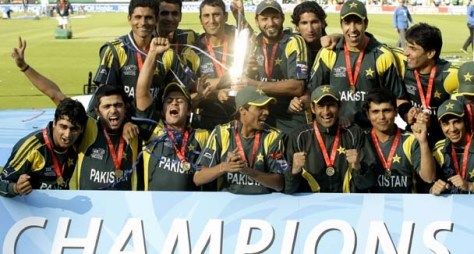
The first World 20-20 semi-final win for Pakistan is not just sports. For Pakistanis, who have seen their homeland go through the failures of their ruling elite and the trials and machinations of their scheming neighbours, it represents a desire for something more.
TORONTO, Canada: Pakistan always has been a nation of miraculous survival.
Burdened by war, distraught by multiple enemies, crumbling due to lack of stable economy, badmouthed in the cricket arena by critics across the globe. This one nation that has been salvaging itself over the course of history, rising above its challenges and challengers alike, has done it again in the T20 cricket semi-final.
They came with a bad physical and even worse psychological form, many of them hailing from cities that are constantly attacked by terrorists sent from Afghanistan. They came to England with a lot on their minds; the T20 World Cup was just one of them. They were not able to play any decent cricket for the past 2 years, almost. No one expected any thing more of them this time. The political crisis has become so intertwined with our cricket lives that even the commentators were (intentionally or not) using phrases like "this is the Pakistan to be afraid of". I personally loved that.
But once again, the Pakistani nation rose to support the only group of people who we have relied and loved unconditionally since the beginning; our cricket team. Just this one, they forgot about the war, forgot about the politicians busy playing them behind their backs, forgot about the social maladies, forgot about the lack of money, forgot about all their troubles and put their country and its ambassadors to the forefront. The cricketers themselves worked to put all problems on the back shelf just temporarily and focus on this one ray of hope that can have such a huge psychological impact on a country no one has hope for any more.
Our team was criticised the moment it lost the warm-up match to India. It was criticised for experimenting with their batting line-up, it was criticised for losing where it didn't even matter! India, on the other hand, had the whole world rooting for them. (That is a trademark Indian ploy, by the way.) Indians across the globe were ready to put Dhoni in a temple and start worshipping him. The arrogance in their step was unmistakeable. But their defeat was equally unwelcome and now caricatures of Dhoni are being burned on the streets! South Africa itself was being hailed as the perfect team, the ultimate T20 hotshot. They were undefeated throughout the tournament but ended up falling victim to the law of averages. You have to lose somewhere, and by the Grace of Allah, Pakistan lost at just the right moments.
And they won at the right ones, too. It is crucial to remember why Pakistan's win is so important. This win is not about winning at all. It is about showing the world that once again, Pakistan has performed in the face of difficulty; death of their coach, attack on their country, bombing of their cities, exploitation of their money. A nation who the whole world had given up on has turned around to come out with a lot more than they expected. But they earned it. These players were working under the pressure of not only the game, but the political games being played with their loved ones in their hometowns. Sometimes, Allah sends motivation from unusual sources.
Younis Khan has even decided to dedicate the cup to Bob Woolmer should Pakistan take it home with them. Pakistanis around the world are praying that we do bring it home. We must continue these prayers and pray two Rakats of thanks to Allah for providing us with hope and motivation when all things were falling apart. Let it be known that our win is not defined by the World Cup (even though we are going to pray long and hard that we win it and win it GOOD). Rather, our win is defined by our ability to overcome difficulties, rise above the challenge and stand united so we can show our enemies we are not defeated; we will never be.
Pakistan Zindabad.
Ms. Khalid can be reached at romesa.khalid[at]utoronto.ca
By: Romesa Khalid

The first World 20-20 semi-final win for Pakistan is not just sports. For Pakistanis, who have seen their homeland go through the failures of their ruling elite and the trials and machinations of their scheming neighbours, it represents a desire for something more.
TORONTO, Canada: Pakistan always has been a nation of miraculous survival.
Burdened by war, distraught by multiple enemies, crumbling due to lack of stable economy, badmouthed in the cricket arena by critics across the globe. This one nation that has been salvaging itself over the course of history, rising above its challenges and challengers alike, has done it again in the T20 cricket semi-final.
They came with a bad physical and even worse psychological form, many of them hailing from cities that are constantly attacked by terrorists sent from Afghanistan. They came to England with a lot on their minds; the T20 World Cup was just one of them. They were not able to play any decent cricket for the past 2 years, almost. No one expected any thing more of them this time. The political crisis has become so intertwined with our cricket lives that even the commentators were (intentionally or not) using phrases like "this is the Pakistan to be afraid of". I personally loved that.
But once again, the Pakistani nation rose to support the only group of people who we have relied and loved unconditionally since the beginning; our cricket team. Just this one, they forgot about the war, forgot about the politicians busy playing them behind their backs, forgot about the social maladies, forgot about the lack of money, forgot about all their troubles and put their country and its ambassadors to the forefront. The cricketers themselves worked to put all problems on the back shelf just temporarily and focus on this one ray of hope that can have such a huge psychological impact on a country no one has hope for any more.
Our team was criticised the moment it lost the warm-up match to India. It was criticised for experimenting with their batting line-up, it was criticised for losing where it didn't even matter! India, on the other hand, had the whole world rooting for them. (That is a trademark Indian ploy, by the way.) Indians across the globe were ready to put Dhoni in a temple and start worshipping him. The arrogance in their step was unmistakeable. But their defeat was equally unwelcome and now caricatures of Dhoni are being burned on the streets! South Africa itself was being hailed as the perfect team, the ultimate T20 hotshot. They were undefeated throughout the tournament but ended up falling victim to the law of averages. You have to lose somewhere, and by the Grace of Allah, Pakistan lost at just the right moments.
And they won at the right ones, too. It is crucial to remember why Pakistan's win is so important. This win is not about winning at all. It is about showing the world that once again, Pakistan has performed in the face of difficulty; death of their coach, attack on their country, bombing of their cities, exploitation of their money. A nation who the whole world had given up on has turned around to come out with a lot more than they expected. But they earned it. These players were working under the pressure of not only the game, but the political games being played with their loved ones in their hometowns. Sometimes, Allah sends motivation from unusual sources.
Younis Khan has even decided to dedicate the cup to Bob Woolmer should Pakistan take it home with them. Pakistanis around the world are praying that we do bring it home. We must continue these prayers and pray two Rakats of thanks to Allah for providing us with hope and motivation when all things were falling apart. Let it be known that our win is not defined by the World Cup (even though we are going to pray long and hard that we win it and win it GOOD). Rather, our win is defined by our ability to overcome difficulties, rise above the challenge and stand united so we can show our enemies we are not defeated; we will never be.
Pakistan Zindabad.
Ms. Khalid can be reached at romesa.khalid[at]utoronto.ca
Seeing the real Pakistan
Our skewed world view won't let us see the real Pakistan
By: Jason Burke
The Observer
Sunday, March 15th, 2009.
First for the good news: Pakistan is not about to explode. The Islamic militants are not going to take power tomorrow; the nuclear weapons are not about to be trafficked to al-Qaida; the army is not about to send the Afghan Taliban to invade India; a civil war is unlikely. The bad news is that Pakistan poses us questions that are much more profound than those we would face if this nation of 170m, the world's second biggest Muslim state, were simply a failed state. If Pakistan collapsed, we would be faced by a serious security challenge. But the resilience of Pakistan and the nation's continuing collective refusal to do what the west would like it to together pose questions with implications far beyond simple security concerns. They are about our ability to influence events in far-off places, our capacity to analyse and understand the behaviour and perceived interests of other nations and cultures, about our ability to deal with difference, about how we see the world.
Pakistan has very grave problems. In the last two years, I have reported on bloody ethnic and political riots, on violent demonstrations, from the front line of a vicious war against radical Islamic insurgents. I spent a day with Benazir Bhutto a week before she was assassinated and covered the series of murderous attacks committed at home and abroad by militant groups based in Pakistan with shadowy connections to its security services. There is an economic crisis and social problems - illiteracy, domestic violence, drug addiction - of grotesque proportions. Osama bin Laden is probably on Pakistani soil.
For many developing nations, all this would signal the state's total disintegration. This partly explains why Pakistan's collapse is so often predicted. The nation's meltdown was forecast when its eastern half seceded to become Bangladesh in 1971, during the violence that preceded General Zia ul-Haq's coup in 1977, when the Soviets invaded Afghanistan, when Zia was killed in 1988, during the horrific sectarian violence of the early Nineties, through sundry ethnic insurgencies, after 9/11, after the 2007 death of Bhutto and now after yet another political crisis. These predictions have been consistently proved wrong. The most recent will be too. Yesterday, tempers were already calming.
Some of the perpetual international hysteria is stoked by the Pakistanis themselves. Successive governments have perfected the art of negotiating by pointing a gun to their own heads. They know that their nation's strategic importance guarantees the financial life support they need from the international community. More broadly, our understanding of Pakistan is skewed. This is in part due to centuries of historical baggage. Though few would quote Emile Zola on contemporary France, Winston Churchill, who as a young man fought on the North-West Frontier, is regularly cited to explain today's insurgency. This legacy also includes stereotypes of "Mad Mullahs" running amok, an image fuelled by television footage that highlights ranting demonstrators from Pakistan's Islamist parties though they have never won more than 14% in an election.
For many Britons, Pakistan represents "the other" - chaotic, distant, exotic, dirty, hot, fanatical and threatening. Yet at the same time, Pakistan seems very familiar. There is the English language, cricket, kebabs and curries and figures such as Imran Khan. There are a million-odd Britons of Pakistani-descent who over four decades have largely integrated far better in the UK than often suggested.
It is the tension between these two largely imaginary Pakistans that leads to such strong reactions in Britain. We see the country as plunged in a struggle between the frighteningly foreign and the familiar, between fanaticism and western democracy, values, our vision of the world and how it should be ordered. Yet while we are fretting about Pakistan's imminent disintegration, we are blind to the really important change.
Recent years have seen the consolidation of a new Pakistani identity between these two extremes. It is nationalist, conservative in religious and social terms and much more aggressive in asserting what are seen, rightly or wrongly, as local "Pakistani" interests. It is a mix of patriotic chauvinism and moderate Islamism that is currently heavily informed by a distorted view of the world sadly all too familiar across the entire Muslim world. This means that for many Pakistanis, the west is rapacious and hostile. Admiration for the British and desire for holidays in London have been replaced by a view of the UK as "America's poodle" and dreams of Dubai or Malaysia. The 9/11 attacks are seen, even by senior army officers, as a put-up job by Mossad, the CIA or both. The Indians, the old enemy, are seen as running riot in Afghanistan where the Taliban are "freedom fighters". AQ Khan, the nuclear scientist seen as a bomb-selling criminal by the West, is a hero. Democracy is seen as the best system, but only if democracy results in governments that take decisions that reflect the sentiments of most Pakistanis, not just those of the Anglophone, westernised elite among whom western policy-makers, politicians and journalists tend to chose their interlocutors.
This view of the world is most common among the new, urban middle classes in Pakistan, much larger after a decade of fast and uneven economic growth. It is this class that provides the bulk of the country's military officers and bureaucrats. This in part explains the Pakistani security establishment's dogged support for elements within the Taliban. The infamous ISI spy agency is largely staffed by soldiers and the army is a reflection of society. For the ISI, as for many Pakistanis, supporting certain insurgent factions in Afghanistan is seen as the rational choice. If this trend continues, it poses us problems rather different from those posed by a failed state. Instead, you have a nuclear armed nation with a large population that is increasingly vocal and which sees the world very differently from us.
We face a related problem in Afghanistan where we are still hoping to build the state we want the Afghans to want, rather than the state that they actually want. Ask many Afghans which state they hope their own will resemble in a few decades and the answer is "Iran". Dozens of interviews with senior western generals, diplomats and officials in Kabul last week have shown me how deeply the years of conflict and "nation-building" have dented confidence in our ability to transplant western values. Our interest in Afghanistan has been reduced to preventing it from becoming a platform for threats to the west. In Afghanistan, as in Iraq, the west has glimpsed the limits to its power and to the supposedly universal attraction of its values.
The west's dreams of a comfortable post-Cold War era have been rudely shaken. We have been forced reluctantly to accept the independence and influence of China and Russia. These are countries that we recognise as difficult international actors pursuing agendas popular with substantial proportions of their citizens. Other countries, particularly those less troubled than Pakistan or Afghanistan, are likely soon to join that list.
This poses a critical challenge in foreign policy. Worrying about the imminent collapse of Pakistan is not going to help us find answers to the really difficult questions that Pakistan poses.
Link: http://www.guardian.co.uk/commentisfree/2009/mar/15/jason-burke-pakistan
By: Jason Burke
The Observer
Sunday, March 15th, 2009.
First for the good news: Pakistan is not about to explode. The Islamic militants are not going to take power tomorrow; the nuclear weapons are not about to be trafficked to al-Qaida; the army is not about to send the Afghan Taliban to invade India; a civil war is unlikely. The bad news is that Pakistan poses us questions that are much more profound than those we would face if this nation of 170m, the world's second biggest Muslim state, were simply a failed state. If Pakistan collapsed, we would be faced by a serious security challenge. But the resilience of Pakistan and the nation's continuing collective refusal to do what the west would like it to together pose questions with implications far beyond simple security concerns. They are about our ability to influence events in far-off places, our capacity to analyse and understand the behaviour and perceived interests of other nations and cultures, about our ability to deal with difference, about how we see the world.
Pakistan has very grave problems. In the last two years, I have reported on bloody ethnic and political riots, on violent demonstrations, from the front line of a vicious war against radical Islamic insurgents. I spent a day with Benazir Bhutto a week before she was assassinated and covered the series of murderous attacks committed at home and abroad by militant groups based in Pakistan with shadowy connections to its security services. There is an economic crisis and social problems - illiteracy, domestic violence, drug addiction - of grotesque proportions. Osama bin Laden is probably on Pakistani soil.
For many developing nations, all this would signal the state's total disintegration. This partly explains why Pakistan's collapse is so often predicted. The nation's meltdown was forecast when its eastern half seceded to become Bangladesh in 1971, during the violence that preceded General Zia ul-Haq's coup in 1977, when the Soviets invaded Afghanistan, when Zia was killed in 1988, during the horrific sectarian violence of the early Nineties, through sundry ethnic insurgencies, after 9/11, after the 2007 death of Bhutto and now after yet another political crisis. These predictions have been consistently proved wrong. The most recent will be too. Yesterday, tempers were already calming.
Some of the perpetual international hysteria is stoked by the Pakistanis themselves. Successive governments have perfected the art of negotiating by pointing a gun to their own heads. They know that their nation's strategic importance guarantees the financial life support they need from the international community. More broadly, our understanding of Pakistan is skewed. This is in part due to centuries of historical baggage. Though few would quote Emile Zola on contemporary France, Winston Churchill, who as a young man fought on the North-West Frontier, is regularly cited to explain today's insurgency. This legacy also includes stereotypes of "Mad Mullahs" running amok, an image fuelled by television footage that highlights ranting demonstrators from Pakistan's Islamist parties though they have never won more than 14% in an election.
For many Britons, Pakistan represents "the other" - chaotic, distant, exotic, dirty, hot, fanatical and threatening. Yet at the same time, Pakistan seems very familiar. There is the English language, cricket, kebabs and curries and figures such as Imran Khan. There are a million-odd Britons of Pakistani-descent who over four decades have largely integrated far better in the UK than often suggested.
It is the tension between these two largely imaginary Pakistans that leads to such strong reactions in Britain. We see the country as plunged in a struggle between the frighteningly foreign and the familiar, between fanaticism and western democracy, values, our vision of the world and how it should be ordered. Yet while we are fretting about Pakistan's imminent disintegration, we are blind to the really important change.
Recent years have seen the consolidation of a new Pakistani identity between these two extremes. It is nationalist, conservative in religious and social terms and much more aggressive in asserting what are seen, rightly or wrongly, as local "Pakistani" interests. It is a mix of patriotic chauvinism and moderate Islamism that is currently heavily informed by a distorted view of the world sadly all too familiar across the entire Muslim world. This means that for many Pakistanis, the west is rapacious and hostile. Admiration for the British and desire for holidays in London have been replaced by a view of the UK as "America's poodle" and dreams of Dubai or Malaysia. The 9/11 attacks are seen, even by senior army officers, as a put-up job by Mossad, the CIA or both. The Indians, the old enemy, are seen as running riot in Afghanistan where the Taliban are "freedom fighters". AQ Khan, the nuclear scientist seen as a bomb-selling criminal by the West, is a hero. Democracy is seen as the best system, but only if democracy results in governments that take decisions that reflect the sentiments of most Pakistanis, not just those of the Anglophone, westernised elite among whom western policy-makers, politicians and journalists tend to chose their interlocutors.
This view of the world is most common among the new, urban middle classes in Pakistan, much larger after a decade of fast and uneven economic growth. It is this class that provides the bulk of the country's military officers and bureaucrats. This in part explains the Pakistani security establishment's dogged support for elements within the Taliban. The infamous ISI spy agency is largely staffed by soldiers and the army is a reflection of society. For the ISI, as for many Pakistanis, supporting certain insurgent factions in Afghanistan is seen as the rational choice. If this trend continues, it poses us problems rather different from those posed by a failed state. Instead, you have a nuclear armed nation with a large population that is increasingly vocal and which sees the world very differently from us.
We face a related problem in Afghanistan where we are still hoping to build the state we want the Afghans to want, rather than the state that they actually want. Ask many Afghans which state they hope their own will resemble in a few decades and the answer is "Iran". Dozens of interviews with senior western generals, diplomats and officials in Kabul last week have shown me how deeply the years of conflict and "nation-building" have dented confidence in our ability to transplant western values. Our interest in Afghanistan has been reduced to preventing it from becoming a platform for threats to the west. In Afghanistan, as in Iraq, the west has glimpsed the limits to its power and to the supposedly universal attraction of its values.
The west's dreams of a comfortable post-Cold War era have been rudely shaken. We have been forced reluctantly to accept the independence and influence of China and Russia. These are countries that we recognise as difficult international actors pursuing agendas popular with substantial proportions of their citizens. Other countries, particularly those less troubled than Pakistan or Afghanistan, are likely soon to join that list.
This poses a critical challenge in foreign policy. Worrying about the imminent collapse of Pakistan is not going to help us find answers to the really difficult questions that Pakistan poses.
Link: http://www.guardian.co.uk/commentisfree/2009/mar/15/jason-burke-pakistan
mardi 5 janvier 2010
Dear Mr. Terrorist
So you think you know who you're working for?
By: Gordon Duff
Published at Opinion-Maker.org
04 Jan, 2010
By: Gordon Duff
Published at Opinion-Maker.org
04 Jan, 2010
Dear Mr. Terrorist,
Hello and Happy New Year from an American friend. I hope your new year is one that offers both health, spiritual enlightenment and an opportunity to learn what you have gotten yourself into before it's too late. Take a look at that man beside you, the one who will some day hand you a bomb and tell you to kill yourself and, maybe, dozens of women and children, many Muslims. Are you really sure he is who he says he is? Like the "Al Qaeda" leaders in Yemen, you know, the ones who Dick Cheney decided to release for some unknown reason, are you, maybe, taking orders from someone like this?
You remember Usama bin Laden, do you not? Remember why he said he had nothing to do with the 9/11 attacks? He said the Koran would not allow it. Does not the Koran say this is sin? Look at poor Umar Farouk Abdul-Mutallab (the Nigerian nationality UK-student who attempted to blow-up the Detroit bound NWA flight), now sitting in a prison in Milan, Michigan. How do you think he was helped through airport after airport, all run by Israelis, put on a plane full of Muslims, men, women, families, going back to their homes in Detroit (Fi Aman-Allah), with orders to blow it up? Do you think the people who walked him around passport control at Schiphol Airport could have only done so with the highly secure special keys available only to the security company running the airport? Of course you know who these people are.
Let us say you are in Afghanistan. Did you ever wonder where all those brand new weapons come from? Look at the markings. Does it not say "Made in India?" So, you head into Pakistan to kill Muslims with your new weapons from Israel and India. You think they were free? Imagine the laughter in Tel-Aviv and Mumbai. You believe you are acting in Fi Sabil-Allah (for the cause of Allah)? Do you not believe that America goes to war to make money for its defence companies and big oil? Are you not aware that much of the ownership of America's military suppliers is from the Middle East? Without money from Saudi Arabia and the UAE, the money financing the bombs and planes, Islamic money, would there be a war?
Many say they fight America because it is here, in an Islamic country, supporting a puppet government. If America is here to fight you and you are here to fight them, who is benefiting? What are you fighting for? Will you want a government like the Islamic Republic of Iran? Do you know that there is now little difference between the government there today and the puppet dictatorship of the Shah? Aren't loyal, country-loving people being murdered by secret police now as they were 40 years ago? Years ago, when America was cast out of Iran and Iraq (on US backing) attacked Iran, did not Iran turn to Israel to bargain with the Americans for weapons in exchange for oil? Perhaps you would want to consider that giving away your trust without opening your eyes to what can be seen is unwise.
No matter if the US stays in Afghanistan or goes, India and Israel will continue to meddle in the country as they do in many others. And when they too will have to leave, perhaps China will take-over. Look at the map. Only Pakistan has nuclear weapons, a dependable military and an elected government, albeit problematic and unstable past. You would destroy it and turn it over to India and Israel in the name of Islam? Who do you serve?
Are you killing Americans to teach a lesson? To whom? Does corporate America care if its soldiers die? Do you know that when wounded soldiers return from war, they are treated like dogs, here? America talks about how it loves its soldiers but it cares little more for them than it cares for you. It simply kills them in a slower and more painful way.
Consider these things before blowing-up yourself and taking the lives of those around you:
[1]. You are likely working for people influenced or even paid by the enemies of very Islam that you are going to die for.
[2]. Your percieved American enemies (common people of US) are people far more like you, just like many fellow Muslims.
[3]. War and terrorism empowers the enemies of Islam and cripples unity and economic development among Islamic nations.
[4]. If you believe killing and dying for your religion is your duty, you have little or no real understanding of the teachings of the Prophet Muhammad (Sal-Allaho Alayhi Wa-Aalihi Wassallum).
[5]. Learn the lessons of Vietnam: stop killing for creating terror, ask for Americans to go home, then settle your political differences among yourselves. America will not return once they have left.
[6]. Accept the fact that, maybe in 5 years, maybe 20 years, your enemies will be your business associates and possibly your friends. It is beginning to happen now but it is hard to see when you are still carrying a gun.
If you seek justice against tyranny, know you have allies around the world, many in America. We can only define justice when we talk, when we listen. We all know tyranny very well. The boot of tyranny is everywhere. War has brought a flowering of tyranny that has the potential to envelop this entire century. Do we kill tyranny with more war?
Looking away from NWA Flight 253
By: Gordon Duff
Published at Opinion-Maker.org
01 Jan, 2010
Detroit: Mainstream Press Selling Little Green Men
Once, a story wasn't real unless it was carried on "mainstream news." "They" used to make news "official," certifying the real from theory and conjecture, made honest and "clean" by their reputations and expertise. Then came the news wars, left against right, "fair and balanced" as a way of describing "slant and spin." Even that grew old as people began to realize that "left" and "right" was only imagination and news was only another form of corporate advertising, first thinly disguised and eventually a pointless waste of time, reality TV with no reality.
What broke the camel's back? It happened when aliens from the planet Schipol invaded Detroit. This was a story they had to crush before it destroyed the very fabric of western culture. Before that dozens even hundreds of stories were ignored, "spun" out of existence or "de-fabricated", everything from illegal invasions to a systematic disassembly of America's system of government, capitalist economy and civil rights. Those things had to go, they weren't "efficient" enough for the Masters of the Universe who dictate to the soulless buffoons selling fantasy as news. Then came Detroit.
Normally, when the phony news is being attacked as government or corporate controlled, 9/11 or the "imbedded" reporters during the Iraq invasion are brought up. The Detroit terror attack goes beyond that, not so much in significance though, since no body count, no huge explosions, no toppling statues, no charred children, but in significance the Detroit cover-up is entirely on another level. Detroit is reminiscent of another story from another era. Roswell, 1947.
Another thing: There were two terrorists taken from the Detroit plane but now, mysteriously, there is only one left? Is the other one in a freezer at Wright Patterson Air-Force Base or held prisoner in Area 51? When the FBI visited witnesses, playing "Men in Black", did they think we were under attack from aliens? "You saw no flying saucer, there were no aliens, it was only swamp gas and the planet Venus. The Indian man in orange we arrested and hauled away in chains never existed, nor did the bomb in his carry-on luggage. You are all suffering from mass hysteria and post traumatic stress."
Is the press shying away from the story because the terrorists and their helpers, CIA employees in Nigeria, airport security in the Netherlands, mysteriously repatriated former Gitmo residents released by Bush and the dozens, perhaps hundreds of others who nudged a bit here, erased a bit there and looked the other way, are all secretly aliens also? Are we living "The Day of the Triffids?" Is this science fiction? Is the press working so hard to look the other way when a pack of burglers drops a conspiracy in their lap a 3 year old could understand because they are protecting us from the terror of an upcoming alien invasion? What makes this, the lamest terrorist attack plan of all time, to not be the last nail in the coffin of phony corporate journalism? What qualifies it for such a flagrant press cover-up? Is it because inside is a story where every lead goes one place, a story ripe with evidence, testimony, CCTV, immigration records, release records from Guantanamo, public records in Nigeria, records of Israeli company charged with Amsterdam's Schiphol airport security, reports from the Government of Yemen, all lead one place? Israel.
No matter where you follow this story, every step of the way one thing comes up. Israel. It is almost as though, if you really look at it, like Israel and friends of theirs in the US have found a way of making money through creating phony terrorist attacks. Are people making money off this terrorist stuff and the wars? I don't know, maybe the press ought to look into it. I wonder what they would find.
So, how do we deal with it? Simple. We're told: "There is no story." Instead, we send government agents out to intimidate witnesses, "classify" evidence and "find" (seek & destroy) the truth. How did the press react? Our terrorist's father had the worst cover in the history of, well, how do we say it? "Hi, I am a friendly banker with a foolish son. No, I don't run a huge arms industry in partnership with Israel and I am not close to the American Ambassador and the CIA Chief of Station in Nigeria." Shouldn't a sane press be alarmed at that? People with the power to release the most dangerous terrorists ever held by the US, released without a single word, terrorists who seemed to put together a major terror plot that required the full cooperation of the CIA, State Department, Homeland Security and, most of all, the security services of the Netherlands, secret services of Israel and India, are so careless and incompetent that they are caught at every level, exposed, seen, heard, photographed, tracked down and nobody "paid to care" seems to care?
Published at Opinion-Maker.org
01 Jan, 2010
Detroit: Mainstream Press Selling Little Green Men
Once, a story wasn't real unless it was carried on "mainstream news." "They" used to make news "official," certifying the real from theory and conjecture, made honest and "clean" by their reputations and expertise. Then came the news wars, left against right, "fair and balanced" as a way of describing "slant and spin." Even that grew old as people began to realize that "left" and "right" was only imagination and news was only another form of corporate advertising, first thinly disguised and eventually a pointless waste of time, reality TV with no reality.
What broke the camel's back? It happened when aliens from the planet Schipol invaded Detroit. This was a story they had to crush before it destroyed the very fabric of western culture. Before that dozens even hundreds of stories were ignored, "spun" out of existence or "de-fabricated", everything from illegal invasions to a systematic disassembly of America's system of government, capitalist economy and civil rights. Those things had to go, they weren't "efficient" enough for the Masters of the Universe who dictate to the soulless buffoons selling fantasy as news. Then came Detroit.
Normally, when the phony news is being attacked as government or corporate controlled, 9/11 or the "imbedded" reporters during the Iraq invasion are brought up. The Detroit terror attack goes beyond that, not so much in significance though, since no body count, no huge explosions, no toppling statues, no charred children, but in significance the Detroit cover-up is entirely on another level. Detroit is reminiscent of another story from another era. Roswell, 1947.
Another thing: There were two terrorists taken from the Detroit plane but now, mysteriously, there is only one left? Is the other one in a freezer at Wright Patterson Air-Force Base or held prisoner in Area 51? When the FBI visited witnesses, playing "Men in Black", did they think we were under attack from aliens? "You saw no flying saucer, there were no aliens, it was only swamp gas and the planet Venus. The Indian man in orange we arrested and hauled away in chains never existed, nor did the bomb in his carry-on luggage. You are all suffering from mass hysteria and post traumatic stress."
Is the press shying away from the story because the terrorists and their helpers, CIA employees in Nigeria, airport security in the Netherlands, mysteriously repatriated former Gitmo residents released by Bush and the dozens, perhaps hundreds of others who nudged a bit here, erased a bit there and looked the other way, are all secretly aliens also? Are we living "The Day of the Triffids?" Is this science fiction? Is the press working so hard to look the other way when a pack of burglers drops a conspiracy in their lap a 3 year old could understand because they are protecting us from the terror of an upcoming alien invasion? What makes this, the lamest terrorist attack plan of all time, to not be the last nail in the coffin of phony corporate journalism? What qualifies it for such a flagrant press cover-up? Is it because inside is a story where every lead goes one place, a story ripe with evidence, testimony, CCTV, immigration records, release records from Guantanamo, public records in Nigeria, records of Israeli company charged with Amsterdam's Schiphol airport security, reports from the Government of Yemen, all lead one place? Israel.
No matter where you follow this story, every step of the way one thing comes up. Israel. It is almost as though, if you really look at it, like Israel and friends of theirs in the US have found a way of making money through creating phony terrorist attacks. Are people making money off this terrorist stuff and the wars? I don't know, maybe the press ought to look into it. I wonder what they would find.
So, how do we deal with it? Simple. We're told: "There is no story." Instead, we send government agents out to intimidate witnesses, "classify" evidence and "find" (seek & destroy) the truth. How did the press react? Our terrorist's father had the worst cover in the history of, well, how do we say it? "Hi, I am a friendly banker with a foolish son. No, I don't run a huge arms industry in partnership with Israel and I am not close to the American Ambassador and the CIA Chief of Station in Nigeria." Shouldn't a sane press be alarmed at that? People with the power to release the most dangerous terrorists ever held by the US, released without a single word, terrorists who seemed to put together a major terror plot that required the full cooperation of the CIA, State Department, Homeland Security and, most of all, the security services of the Netherlands, secret services of Israel and India, are so careless and incompetent that they are caught at every level, exposed, seen, heard, photographed, tracked down and nobody "paid to care" seems to care?
Fascinating.
What exactly do you have to do to get arrested for terrorism? How lame do you have to be to get caught? How involved does our government and their little "helper" governments have to be, how obvious, how incompetent, how clumsy, before the press feels a need to report, just out of embarrassment. You don't get much closer to a "smoking gun" than this. Maybe whoever was involved in the Detroit attack was joking. May be we should ask them. Afterall we know who they are, we know where they are, everyone does, everyone BUT the "mainstream press."
jeudi 31 décembre 2009
New Year 2010
Copy and Paste the number lines below in a new Notepad document (won't work with Wordpad), maximize the window, press Control + H (for windows) to invoke the "Replace" dialog box, type 0 in "Find" field and _ in "Replace" field, click "Replace All".
À vous ...
À vous ...
000000000000000000000000000000000000000000000000000000000000000000000000000000000000000000000000000000000000000
000990000099009900999999990099000009900000009900000099009999999900990000990000000000000090000000000000000000000
000990000099009900999999990099000009900000000990000990009999999900990000990000000000000999000000000000000000000
000990000099009900990000000099000009900000000099009900009900009900990000990000000000009909900000000000000000000
000990090099009900999999990099999999900000000009999000009900009900990000990000000000099000990000000000000000000
000990999099009900999999990099999999900000000000990000009900009900990000990000000000999999999000000000000000000
000999909999009900000000990099000009900000000000990000009900009900990000990000000009999999999900000000000000000
000999000999009900999999990099000009900000000000990000009999999900990000990000000099000000000990000000000000000
000990000099009900999999990099000009900000000000990000009999999900999999990000000990000000000099000000000000000
000000000000000000000000000000000000000000000000000000000000000000000000000000000000000000000000000000000000000
000000000000000000000000000000000000000000000000000000000000000000000000000000000000000000000000000000000000000
000000000000000000000000000000000000000000000000000000000000000000000000000000000000000000000000000000000000000
009900000990000000009000000000999999990099999999009900000099000000009900000990099999999009900000990000000000000
009900000990000000099900000000999999990099999999000990000990000000009990000990099999999009900000990000000000000
009900000990000000990990000000990000990099000099000099009900000000009999000990099000000009900000990000000000000
009999999990000009900099000000999999990099999999000009999000000000009909900990099999999009900900990000000000000
009999999990000099999999900000999999990099999999000000990000000000009900990990099999999009909990990000000000000
009900000990000999999999990000999000000099000000000000990000000000009900099990099000000009999099990000000000000
009900000990009900000000099000990000000099000000000000990000000000009900009990099999999009990009990000000000000
009900000990099000000000009900990000000099000000000000990000000000009900000990099999999009900000990000000000000
000000000000000000000000000000000000000000000000000000000000000000000000000000000000000000000000000000000000000
000000000000000000000000000000000000000000000000000000000000000000000000000000000000000000000000000000000000000
000000000000000000000000000000000000000000000000000000000000000000000000000000000000000000000000000000000000000
000990000009900999999990000000009000000000999999990000000099999990099999999000999000099999999000000000000000000
000099000099000999999990000000099900000000999999990000000099999999099000099000099000099000099000000000000000000
000009900990000990000000000000990990000000990000990000000000000099099900099000099000099900099000000000000000000
000000999900000999999990000009900099000000999999990000000000000990099090099000099000099090099000000000000000000
000000099000000999999990000099999999900000999999990000000000009900099009099000099000099009099000000000000000000
000000099000000990000000000999999999990000990990000000000000990000099000999000099000099000999000000000000000000
000000099000000999999990009900000000099000990099000000000099999999099000099000099000099000099000000000000000000
000000099000000999999990099000000000009900990000990000000099999999099999999000999900099999999000000000000000000
000000000000000000000000000000000000000000000000000000000000000000000000000000000000000000000000000000000000000
*-*-*-*-*-*-*-*-*-*-*-*-*-*-*-*-*-*-*-*-*-*-*-*-*-*-*-*-*-*-*-*-*-*-*-*-*-*-*-*-*-*-*-*-*-*-*-*-*-*-*-*-*-*-*-*-*-*-*
mardi 22 décembre 2009
Direct elections for the Senate in Pakistan
THE TIDE HAS TURNED OR RE-TURNED?
By: Kunwar Idris
Sunday, 20 Dec, 2009
kunwaridris[at]hotmail.com
By: Kunwar Idris
Sunday, 20 Dec, 2009
kunwaridris[at]hotmail.com
It must go to the lasting discredit of our political parties and their leaders that in less than two years of a credible election the centre of state power has shifted entirely from parliament to the Supreme Court and the public aspirations towards the armed forces of Pakistan. The politicians may allege conspiracies by outsiders but have only their own shenanigans to blame. In pursuing personal and factional interests they have been violating every rule and convention of parliamentary democracy. In the absence of a single-party majority in the National Assembly, the obvious course for the two major parties i.e. the Pakistan People's Party (PPP) and the Pakistan Muslim League (PML-N group) to follow was that one should lead a coalition government and the other a united opposition. Instead, President Zardari incessantly and deceitfully talked of "taking everybody on board" and Nawaz Sharif (leader of PML-N) cluelessly sung of "not destabilising the system". They couldn't, however, bring themselves round to forming a national government. Resultantly, the governments at the centre and in the provinces have been no more than ragbags of ministers, advisers, special assistants, and ambassadors at large -- you name it, they have it -- drawn from a variety of parties, most with shockingly shady backgrounds. Particularly comical was the position in Balochistan where, at one time, every assembly member joined the government but for one who was also the leader of his own one-man opposition. The worse and the most fatal blow to the parliamentary system, however, came when Mr. Asif Ali Zardari chose himself to be the president of the country and chose for his party (PPP) in Punjab to be an unwelcomed, sulking partner in PML-N dominated government rather than sitting in a functional, respectable opposition. Government Ministers like Mr. Kamal Azfar should not have been blaming the CIA and ISI, nor Babar Awan, the Jews and Qadianis for conspiring against the government. Conspiracies brewed in their own ranks. The Supreme Court's order now leaves no choice for the political leaders but to agree to hold elections afresh. If the Supreme Court's order points towards immediate elections, the NFC award announced a week earlier provides an initial basis for a new operational framework between the federation and the provinces.
For the first time the award has recognised that:
[1] the provinces deserve a larger share in the national income;
[2] population should not be the only basis for division of developmental funds;
[3] the tax jurisdiction of the provinces needs to be enlarged; and
[4] the provinces should have greater control over their natural resources.
Punjab had been traditionally resisting any departure from the set formula. This time round Shahbaz Sharif (the Chief Minister of Punjab) has valiantly pioneered the change even though his province has been the only loser. Balochistan, the most aggrieved, has gained the most. While it may be said that the award is no substitute for provincial autonomy but it is certainly a big step in that direction. The problems confronting the country are too many and too formidable for the present shattered institutions and demoralised leadership to comprehend and resolve. Topping the list are: constitutional structures, provincial autonomy, jurisdiction of local councils and reorganisation of civil services. Violence may subside but discontent will continue to simmer till the representatives of the people from all regions find some equitable and enduring solutions. That the form of government will be parliamentary and the prime minister the chief executive is by now a settled question. But how the prime minister should be restrained from abusing his authority remains a worrisome issue. The recent appointments of secretaries and ambassadors at will by the Prime Minister are a case in point. A solution that instantly suggests itself is that all such appointments should be subject to the approval of a committee of the Senate. Presently Ben Bernanke is being grilled by a US Senate committee for his second tenure as head of the Federal Reserve. Here in Pakistan the President / Prime Minister pick up whosoever they wish as governor of the State Bank. The public accounts committee headed by Chaudhry Nisar Ali Khan has shown that abuse of financial authority can be checked but long after it has taken place. For such appointments the committee's approval must come beforehand.
In the legislative institutions, the reform most needed is the direct elections to the Senate. In the present system the Senate just mirrors the position of parties in the National Assembly. On provincial level, the aspirations for provincial autonomy range from greater autonomy to mere abolition of the concurrent list. In the prevailing regional situation, which threatens the country overall as much as its various parts, it is nearly impossible to meet the extremists halfway. The new parliament with a directly elected Senate would be the best forum to debate and settle this question as the previous senates have never really been seriously considered as nationalists, rather they're only viewed as cranks and seccessionists. Local councils should be protected in the constitution but each Province must have its own law defining its functions. The underlying principle should be that the council must earn its keep. An independent commission should determine the subsidy each council must get depending on the income it can raise and the service it is expected to provide.The civil service (that is all career public servants to put it curtly) has become an extension of the political party in power. Politicians expect civil servants to carry out their orders, legal or illegal without any moral conscience. For this reason, the people have been fast losing faith in the ability of the civil servants to be just and impartial. Today their trust is at an all-time low. No commission has been able to reverse this trend nor will another if it were to be constituted. The police was politicised more when President Musharraf's law put it under independent commissions. The only remedy left to be tried is to go back to the laws and systems that governed the civil servants before Prime Minister Zulfiqar Ali Bhutto launched a viral corrosion of the legendary institutions in Pakistan by dismissing more than 1,300 of the public officials overnight, in a civilian dictatorship manner. Much may not be achieved but an effort must be made to reform the legal and administrative systems before the optimism generated by the Supreme Court's judgment fades away.
"There is a tide in the affairs of men, which, taken at the flood, leads on to fortune. Omitted, all the voyage of their life is bound in shallows and in miseries. On such a full sea are we now afloat. And we must take the current when it serves, or lose our ventures." -- Shakespeare.
dimanche 20 décembre 2009
Discussing the Pakistan of 1971
......................................................................
Brasstacks Special: 1971 War - The Untold Story
Zaid Hamid discusses the lies and propaganda of India against the people of Pakistan and its armed forces regarding the 1971 war and exposes RAW's role in the Mukti-Bahni conspiracy to break Pakistan apart.
[1]. http://www.youtube.com/watch?v=ULpCroezFrY
[2]. http://www.youtube.com/watch?v=zfKKYt9hy5k
[3]. http://www.youtube.com/watch?v=sTlidi0ZBrs
[4]. http://www.youtube.com/watch?v=_3FGnFQQwGA
[5]. http://www.youtube.com/watch?v=GHGKVN0p4v8
[6]. http://www.youtube.com/watch?v=XQg0dw2gcxk
Excerpts from: "Blood and Tears"
Author of the book: Qutubuddin Aziz
Looking at the tragic events of March 1971 in retrospect, I must confess that even I, although my press service commanded a sizeable network of district correspondents in the interior of East Pakistan, was not fully aware of the scale, ferocity and dimension of the province-wide massacre carried out by RAW-sponsored Mukti-Bahni slaughter squads. The 170 eye-witnesses, whose testimonies or interviews are contained in this book in abridged form have been chosen from a universe of more than 5,000 repatriated non-Bengali families. I had identified, after some considerable research, 55 towns and cities in East Pakistan where the abridgement of the non-Bengali population in March and early April 1971 was conspicuously heavy. The collection and compilation of these eye-witness accounts was started in January 1974 and completed in twelve weeks. A team of four reporters, commissioned for interviewing the witnesses from all these 55 towns and cities of East Pakistan, worked with intense devotion to secure their testimony. Many of the interviews were prolonged because the Witnesses broke down in a flurry of sobs and tears as they related the agonising stories of their wrecked lives. I had issued in February 1974 an appeal in the newspapers for such eye-witness accounts, and I am grateful to the many hundreds of witnesses who promptly responded to my call.
Further Reading:
[1]. Book: Blood and Tears
http://www.statelesspeopleinbangladesh.net/blood_tears.php
[2]. Anatomy of Violence Analysis of Civil War in East Pakistan in 1971
http://www.politics.ox.ac.uk/about/staff/materials/SBose-Anatomy_of_Violence-EPW_v_40_no_41_%282005%29.pdf
"While events of 1971 continue to evoke strong emotion in both Pakistan and Bangladesh (formerly East Pakistan), there has been little systematic study of the violent conflicts that prevailed in the course of the nine-month long civil war. Popular attention has, thus far, focused on the Pakistani army’s action against the Bengalis, or on the India-Pakistan war. However, East Pakistan in 1971 was simultaneously a battleground for many different kinds of violent conflict that included militant rebellion, mob violence, military crackdown on a civilian population, urban terrorism to full-scale war between India and Pakistan. The culture of violence fomented by the conflict of 1971 forms the context for much of Bangladesh’s subsequent history. A careful, evidence-based approach to understanding the events of 1971 is vital if the different parties to the conflict are to be ever reconciled."
[3]. The truth about the Jessore Massacre
http://www.telegraphindia.com/1060319/asp/look/story_5969733.asp
The massacre may have been genocide, but it wasn’t committed by the Pakistan army. The contradictory claims on the photos of the dead of 1971 reveal in part the difficulty of recording a messy war, but also illustrate vividly what happens when political motives corrupt the cause of justice and humanity. The political need to spin a neat story of Pakistani attackers and Bengali victims made the Bengali perpetrators of the massacre of Punjabi civilians in Jessore conceal their crime and blame the army. The New York Times and The Washington Post “bought” that story too. The media’s reputation is salvaged in this case by the even-handed eye-witness reports of Tomalin in The Times and Sunday Times.
[4]. Losing the Victims: Problems of Using Women as Weapons in Recounting the Bangladesh War
http://www.politics.ox.ac.uk/materials/profile_materials/sbose-losing_the_victims-epw_v_42_no_38_2007.pdf
"Every war is accompanied by sexual violence against women. That rape occurred in East Pakistan in 1971 has never been in any doubt. The question is what was the true extent of rape, who were the victims and who the perpetrators and was there any systematic policy of rape by any party, as opposed to opportunistic sexual crimes in times of war. This work brings into focus the real victims of sexual violence by pointing out the paucity of reliable material, critically analysing widely cited testimonies of rape and suggesting the next steps to address the issue meaningfully."
[5]. Book: Pakistan - A Modern History, Ian Talbot, 1998, History, 432 pages
http://www.scribd.com/doc/37177183/Pakistan-a-Modern-History-by-Ian-Talbot
"On meetings between leaders of Awami League, President Yahya and Zulfiqar Ali Bhutto it is stated that Awami League leaders used to arrive with Bangladesh flag flying on their cars."
"Sheikh Mujib-ur-Rehman, on one side, was engaged in negotiations with the President of Pakistan and on the other, on March 21st 1971 (National Day celebrations) he saluted militant students carrying Bangladesh flag."
.....................................................................
Speech of Mutiny:
"Yes; my father did break Pakistan", declares Bangladesh Premier, Sheikh Hasina Wajid
The Daily Mail
March 10th, 2010.
Dhaka — Bangladesh’s Prime Minister Sheikh Hasina Wajid has declared that her father, Sheikh Mujibur Rahman, was a traitor who formed a detailed conspiracy to break Pakistan into two pieces with the help of the Indian government and intelligence agencies during his stay in London in 1969 while the conspiracy was materialized in 1971. Hasina was addressing a discussion in Dhaka to mark the ‘March 7, 1971’ speech of mutiny, in which Sheikh Mujib called on the people of East Pakistan to prepare for secession from the rest of the Pakistan.
She said that her father made seperation plans just months after his release from Kurmitola where he had been detained in the Agartala Conspiracy Case, in which the Pakistan government had brought sedition charges against him and 34 others. “He went to London on October 22 1969, following his release in the Agartala case on April 22 that year. I reached London the next day from Italy, where I was living with my husband,” she recalled.
“It was there that my father at a meeting made plans for separating West Pakistan from East Pakistan, including when the war would start, where our fighters would be trained and where refugees would take shelter.”
“All preparations were made there (London). I was serving tea and entered the room several times where the meeting between my father and some Indian officials was being held. I heard their discussions,” the Prime Minister said.
Referring to the recent debate over who first proclaimed Bangladesh’s independence, she urged all to go through the reports of intelligence agencies and foreign ministries of different countries. She also said that the Aug 15, 1975 assassination of her father and family members, and the Jail Killings of four national leaders on Nov 3 the same year, were planned by those defeated in the war to take revenge for their defeat. “Those who rewarded the killers had never expected Bangladesh’s independence. They [India] wanted to impose the principles of the defeated forces on the people,” she added.
http://gauhar.com/?p=472
......................................................................
Brasstacks Special: 1971 War - The Untold Story
Zaid Hamid discusses the lies and propaganda of India against the people of Pakistan and its armed forces regarding the 1971 war and exposes RAW's role in the Mukti-Bahni conspiracy to break Pakistan apart.
[1]. http://www.youtube.com/watch?v=ULpCroezFrY
[2]. http://www.youtube.com/watch?v=zfKKYt9hy5k
[3]. http://www.youtube.com/watch?v=sTlidi0ZBrs
[4]. http://www.youtube.com/watch?v=_3FGnFQQwGA
[5]. http://www.youtube.com/watch?v=GHGKVN0p4v8
[6]. http://www.youtube.com/watch?v=XQg0dw2gcxk
Excerpts from: "Blood and Tears"
Author of the book: Qutubuddin Aziz
Looking at the tragic events of March 1971 in retrospect, I must confess that even I, although my press service commanded a sizeable network of district correspondents in the interior of East Pakistan, was not fully aware of the scale, ferocity and dimension of the province-wide massacre carried out by RAW-sponsored Mukti-Bahni slaughter squads. The 170 eye-witnesses, whose testimonies or interviews are contained in this book in abridged form have been chosen from a universe of more than 5,000 repatriated non-Bengali families. I had identified, after some considerable research, 55 towns and cities in East Pakistan where the abridgement of the non-Bengali population in March and early April 1971 was conspicuously heavy. The collection and compilation of these eye-witness accounts was started in January 1974 and completed in twelve weeks. A team of four reporters, commissioned for interviewing the witnesses from all these 55 towns and cities of East Pakistan, worked with intense devotion to secure their testimony. Many of the interviews were prolonged because the Witnesses broke down in a flurry of sobs and tears as they related the agonising stories of their wrecked lives. I had issued in February 1974 an appeal in the newspapers for such eye-witness accounts, and I am grateful to the many hundreds of witnesses who promptly responded to my call.
Further Reading:
[1]. Book: Blood and Tears
http://www.statelesspeopleinbangladesh.net/blood_tears.php
[2]. Anatomy of Violence Analysis of Civil War in East Pakistan in 1971
http://www.politics.ox.ac.uk/about/staff/materials/SBose-Anatomy_of_Violence-EPW_v_40_no_41_%282005%29.pdf
"While events of 1971 continue to evoke strong emotion in both Pakistan and Bangladesh (formerly East Pakistan), there has been little systematic study of the violent conflicts that prevailed in the course of the nine-month long civil war. Popular attention has, thus far, focused on the Pakistani army’s action against the Bengalis, or on the India-Pakistan war. However, East Pakistan in 1971 was simultaneously a battleground for many different kinds of violent conflict that included militant rebellion, mob violence, military crackdown on a civilian population, urban terrorism to full-scale war between India and Pakistan. The culture of violence fomented by the conflict of 1971 forms the context for much of Bangladesh’s subsequent history. A careful, evidence-based approach to understanding the events of 1971 is vital if the different parties to the conflict are to be ever reconciled."
[3]. The truth about the Jessore Massacre
http://www.telegraphindia.com/1060319/asp/look/story_5969733.asp
The massacre may have been genocide, but it wasn’t committed by the Pakistan army. The contradictory claims on the photos of the dead of 1971 reveal in part the difficulty of recording a messy war, but also illustrate vividly what happens when political motives corrupt the cause of justice and humanity. The political need to spin a neat story of Pakistani attackers and Bengali victims made the Bengali perpetrators of the massacre of Punjabi civilians in Jessore conceal their crime and blame the army. The New York Times and The Washington Post “bought” that story too. The media’s reputation is salvaged in this case by the even-handed eye-witness reports of Tomalin in The Times and Sunday Times.
[4]. Losing the Victims: Problems of Using Women as Weapons in Recounting the Bangladesh War
http://www.politics.ox.ac.uk/materials/profile_materials/sbose-losing_the_victims-epw_v_42_no_38_2007.pdf
"Every war is accompanied by sexual violence against women. That rape occurred in East Pakistan in 1971 has never been in any doubt. The question is what was the true extent of rape, who were the victims and who the perpetrators and was there any systematic policy of rape by any party, as opposed to opportunistic sexual crimes in times of war. This work brings into focus the real victims of sexual violence by pointing out the paucity of reliable material, critically analysing widely cited testimonies of rape and suggesting the next steps to address the issue meaningfully."
[5]. Book: Pakistan - A Modern History, Ian Talbot, 1998, History, 432 pages
http://www.scribd.com/doc/37177183/Pakistan-a-Modern-History-by-Ian-Talbot
"On meetings between leaders of Awami League, President Yahya and Zulfiqar Ali Bhutto it is stated that Awami League leaders used to arrive with Bangladesh flag flying on their cars."
"Sheikh Mujib-ur-Rehman, on one side, was engaged in negotiations with the President of Pakistan and on the other, on March 21st 1971 (National Day celebrations) he saluted militant students carrying Bangladesh flag."
.....................................................................
Speech of Mutiny:
"Yes; my father did break Pakistan", declares Bangladesh Premier, Sheikh Hasina Wajid
The Daily Mail
March 10th, 2010.
Dhaka — Bangladesh’s Prime Minister Sheikh Hasina Wajid has declared that her father, Sheikh Mujibur Rahman, was a traitor who formed a detailed conspiracy to break Pakistan into two pieces with the help of the Indian government and intelligence agencies during his stay in London in 1969 while the conspiracy was materialized in 1971. Hasina was addressing a discussion in Dhaka to mark the ‘March 7, 1971’ speech of mutiny, in which Sheikh Mujib called on the people of East Pakistan to prepare for secession from the rest of the Pakistan.
She said that her father made seperation plans just months after his release from Kurmitola where he had been detained in the Agartala Conspiracy Case, in which the Pakistan government had brought sedition charges against him and 34 others. “He went to London on October 22 1969, following his release in the Agartala case on April 22 that year. I reached London the next day from Italy, where I was living with my husband,” she recalled.
“It was there that my father at a meeting made plans for separating West Pakistan from East Pakistan, including when the war would start, where our fighters would be trained and where refugees would take shelter.”
“All preparations were made there (London). I was serving tea and entered the room several times where the meeting between my father and some Indian officials was being held. I heard their discussions,” the Prime Minister said.
Referring to the recent debate over who first proclaimed Bangladesh’s independence, she urged all to go through the reports of intelligence agencies and foreign ministries of different countries. She also said that the Aug 15, 1975 assassination of her father and family members, and the Jail Killings of four national leaders on Nov 3 the same year, were planned by those defeated in the war to take revenge for their defeat. “Those who rewarded the killers had never expected Bangladesh’s independence. They [India] wanted to impose the principles of the defeated forces on the people,” she added.
http://gauhar.com/?p=472
......................................................................
samedi 19 décembre 2009
We are on track ... are we?
In my honest opinion, the idea being propelled by the original report: ...
"Support the idea that religion and the state can be separate in Islam too and that this does not endanger the faith but, in fact, may strengthen it".
... is ridiculous in its roots. And we Pakistanis are not the only target of this expansive conspiracy. This same doctrine is being implemented in Iraq. Islam, unlike any other religion, is a full code of conduct ... which guides you from matters simple as personal hygiene to matters complex as running a state. To assume that the state can be governed by keeping the religion out, is not only foolish but outrightly suicidal for in doing so, inevitably we will force the two to clash with eachother. And when that happens the death of the one of the two (religion or state) will remain the only way out. A choice we wouldn't want to make. And we have been there before ... remember the last caliphate (Khilafat-e-Usmania)? But the other end, the belief in extreme nationalism and tribalism, is equally dangerous too! The great philosopher thinker Allama Iqbal has written a beautiful couplet which sums up the attitude of a Muslim towards these ideas of extremism.
In ta'aza khudaon main sab say bara hay watan,
Jo iss ka banay pairhan woh mazhab ka kafan hay!
Translation:
The biggest among the freshly made idols is that of extreme nationalism,
Whatever fits it as a robe, becomes the burial-cloth for the faith!
Islam encourages Muslims to help their countrymen. A Muslim must look after his neighbors regardless of their faith and make sure that they have what they need. That sense of good neighborliness is strongly emphasized by the Prophet who has spoken about every aspect of it. We need to remind ourselves of its essence by quoting the Hadith in which the Prophet swears by Allah three times that a certain person is not a believer. When his companions asked him to define that wretched person, he said: "He who goes to bed having eaten well while his neighbor remains hungry and he is aware of that fact."
Each one of us belongs to a particular country and it's only natural to want the best for our countrymen regardless of their faith. The best way to do that would be to be honest in all our dealings and not succumb to corruption and injustice. But Islam also asks Muslims to take a stand when some people seek to promote the love for a country by defying the teachings of the religion itself. They make an idol out of the country/tribe/sect and urge other Muslims to follow that path. Such people are the biggest threat to our ummah, even bigger a threat than the people of other religions. These people work by proping up identities and ideas which divide Muslims into smaller groups and make them focus on rather irrelevant issues. We Muslims ourselves are partly responsible for the predicament which we find ourselves in, by forgetting what we were told by our Holy Prophet (pbuh). A hadith of our beloved Prophet Mohammad (pbuh) narrated by Abu Dawood says "He is not one of us who calls for Asabiyyah (extreme nationalism/tribalism) or who fights for Asabiyyah or who dies for Asabiyyah."
Rameez Khalid <razocky[at]hotmail.com> writes:
Mercredi, 22 Novembre 2006, 13h 53min 22s
We are on track
For Ilyas's disturbance I, up to my understanding, can only say that this particular statement of this report depicts the ideas which Christians got from Islamic jurist, physician and philosopher Ibn-e-Rushd or Averroës. He said that metaphysical truths can be expressed by 2 ways: Philosophy and Religion, but he never proposed or suggested that basically there are two truths which the Christians misinterpreted as the theory of "double truths", just for separating the Church from the Govt. Basically Ibn-e-Rushd was of the idea that reason takes precedence over religion.
TC. AH.
Inscription à :
Articles (Atom)
